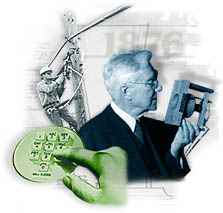
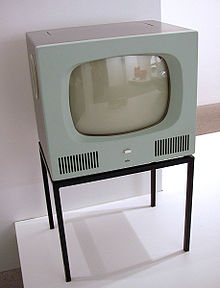
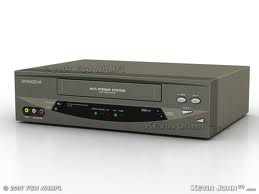
 Early Innovations The first forms of mass-media go back into Ancient World, were types of drama were played out in many cultures. Secondly, books were printed and it changed the way the world received information, but printing these books proved to be very expensive. Then, newspapers came about in 1620, but it took until the 19th Century before it reached mass audiences. By the 1880's motion pictures were being produced and static shots with no sound, was all that were technically possible. The first photograph that was a fixed shot and didn't fade was taken in 1837. The first advertisement with a photograph was produced in Philadelphia, 1843. The 35mm camera was one of the first and easiest cameras for consumers to buy and use and has been around since 1959 to present day. Radio was first broadcast in the 1920's with widespread introduction into people's homes with radio receivers. This was the connection between how people knew what was what was taking place around the world. Every night families would sit around the radio and listen to the news, dramas, comedies and variety shows for entertainment. In the 1954 the first pocket radio was produced and it ran off a 22.5 V battery. The first commercially made electronic television sets with cathode ray tubes were manufactured by Telefunken in Germany in 1934, followed by other makers in France (1936) Britain (1936) and America (1938) The cheapest of the pre-World War II factory-made American sets, a 1938 image-only model with a 3-inch (8 cm) screen, cost US $125, the equivalent of US $1,863 in 2007. The cheapest model with a 12-inch (30 cm) screen was $445 ($6,633) (Wikipedia). Since the late 1920’s the television set has become ubiquitous in homes, businesses and institutions, particularly as a source of entertainment and news. In 1942 TV screens were broadcasting in black and white and by 1951 color TV made its debut. In 1977 Fiber Optic technology was first being experimented with and later would come into people’s homes through TV, Phone and Internet, allowing more information over longer distances. In 1983 Direct satellite broadcasts were being used to transmit signals into television. In 1999 Digital television starts broadcasting in the U.S. and more than 1,000 digital TV stations are on the air and TV enjoys its first major technological change in decades. Also, in this same year consumers start purchasing HDTV in significant numbers. By 2009 broadcast TV goes all digital and most analog TV transmitters are shut down. Today in 2010 3-D television is making its way into our homes and opening a new era in TV programming. Since the 1970s the availability of video cassettes ,laser discs, DVDs and now Blu-ray discs, have resulted in the television set frequently being used for viewing recorded as well as broadcast material. In recent years Internet television has seen the rise of television available via the Internet, e.g. iplayer and Hulu. The first consumer VCR’s were launched in 1971. At first, to purchase a VCR was very expensive, but by 1980 the price became more affordable for consumers. With the introduction of VCR’s came a change with how consumers could watch movies in the convinence of their homes and record programs. Although, by the 1990’s the VHS was replaced by the DVD, which had several advantages to the old tape versions. Early Camcorders or Video Cameras that used these VHS tapes, later in 1995, moved to smaller tapes called DVC. In the last few years we have made more monumental breakthrough's with cameras and video cameras becoming completely digital using no negatives or tapes. The Music Era In 1948, Columbia produced the first record with 23 minutes per side and about 12 songs. The dawn of the “album era” was from the 50’s until the 70’s. In 1964 the mass production of compact audio cassettes began, along with the eight tracks. At first the cassettes were used for simply audio storage or recording and were not well suited for music. It improved dramatically by the 1970’s and proved to out sale the vinyl records. During the1980’s the cassette grew in popularity due to the portable pocket recorders, Sony’s Walkman and “Boom Boxes”. Later in the 90’s came CD’s and the portable CD player; followed in the 2000’s by the MP3 player and now IPods. The CD technology expanded to include CD-Rom and CD-R’s, which remain widely used technologies in the computer industry today. Types of Mass Media
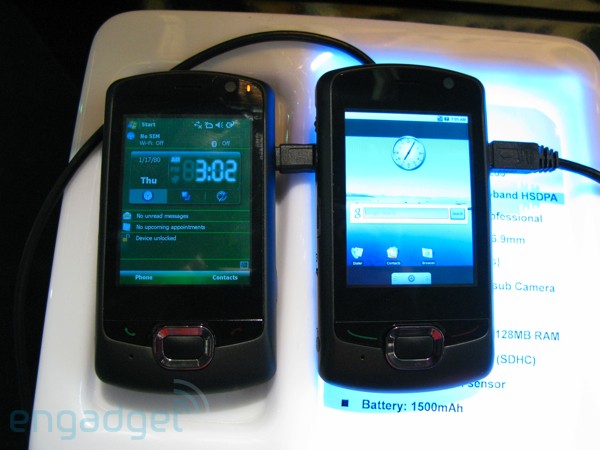
The first commercial cell phone service was launched in Japan by NTT in 1979. In 1982 the FCC appleworld AT&T’s plan for a nationwide network. Through the 1990’s and 2000’s cellular technology advanced to the point where currently there are four major 3G nationwide networks. Fourth generation networks are being rolled out now. These networks along with very small mobile handouts have allowed instant communication from anywhere at anytime possible. Although, computers had their beginnings as analogue machines, the computer we think of today was born during the 1960’s. Electronics miniaturization allowed widespread adoption of computer by the public. This coupled with the Internet allowed greater access than ever to communications, digital information and mass media. The commercialization of the internet in the 1980’s and the explosion of its popular use during the 1990’s resulted in a large impact on culture and economics. The introduction of game changing internet use like, email discussion forums, social networking, and video sharing have influenced our modern day culture. Technology has been with the human race for the longest time. It is defined as skill, knowledge, and expertise. With the advent of the computer, technology took on a new meaning, new world, and very new perspective as applied to how we live. Educationally, Initially computer programming was the area of expertise. Social jargon started to move toward code and acronyms (DOS, OS). Soon computer technology paralleled genius. As this technology was taking effect, microwaves, VCR’s, programmable coffee makers and cable television were opening up in the domestic world. If you knew how to program the VCR, you attained a position of power and adoration. The technology trickled down from the highest point to finally rest at the collegiate level. technological world was opening the eyes of the world population to high convenience electronics. As computer programming escalated, the trickle down effect fell further to reach the hands of the common man in terms of Windows and the MacIntosh. All of these wonderful technological beginnings were infiltrating our everyday lives and slowly we were changing. We couldn’t see it, hear it, or smell it, as the excitement was too overwhelming. We all fell under the guise of allowing the machine to take over. Many years have passed and still many are reticent and reluctant to accepting “technology” even though the revolutionary home electronics including the coffee maker, microwave, home alarm system, cell phones, home computers and DVD players have become staples in our lives. The one technological aspect that causes great alarm is still the computer, its many uses and the disproportion of access, application and education.
|
     |

